

Home My Service Investment
How to Buy an Investment Property in Breckenridge
Breckenridge rental income looks compelling on paper – average annual STR revenue runs $55,000-$60,000 on a well-positioned property. What the listing descriptions leave out is that buying a rental property in Breckenridge starts with a licensing question, not a mortgage application. The STR zone a property sits in determines whether you can legally rent it short-term at all. This article covers how to buy an investment property in Breckenridge: STR rules, investor financing, realistic income projections, and the operating costs that close the gap between gross revenue and actual returns.
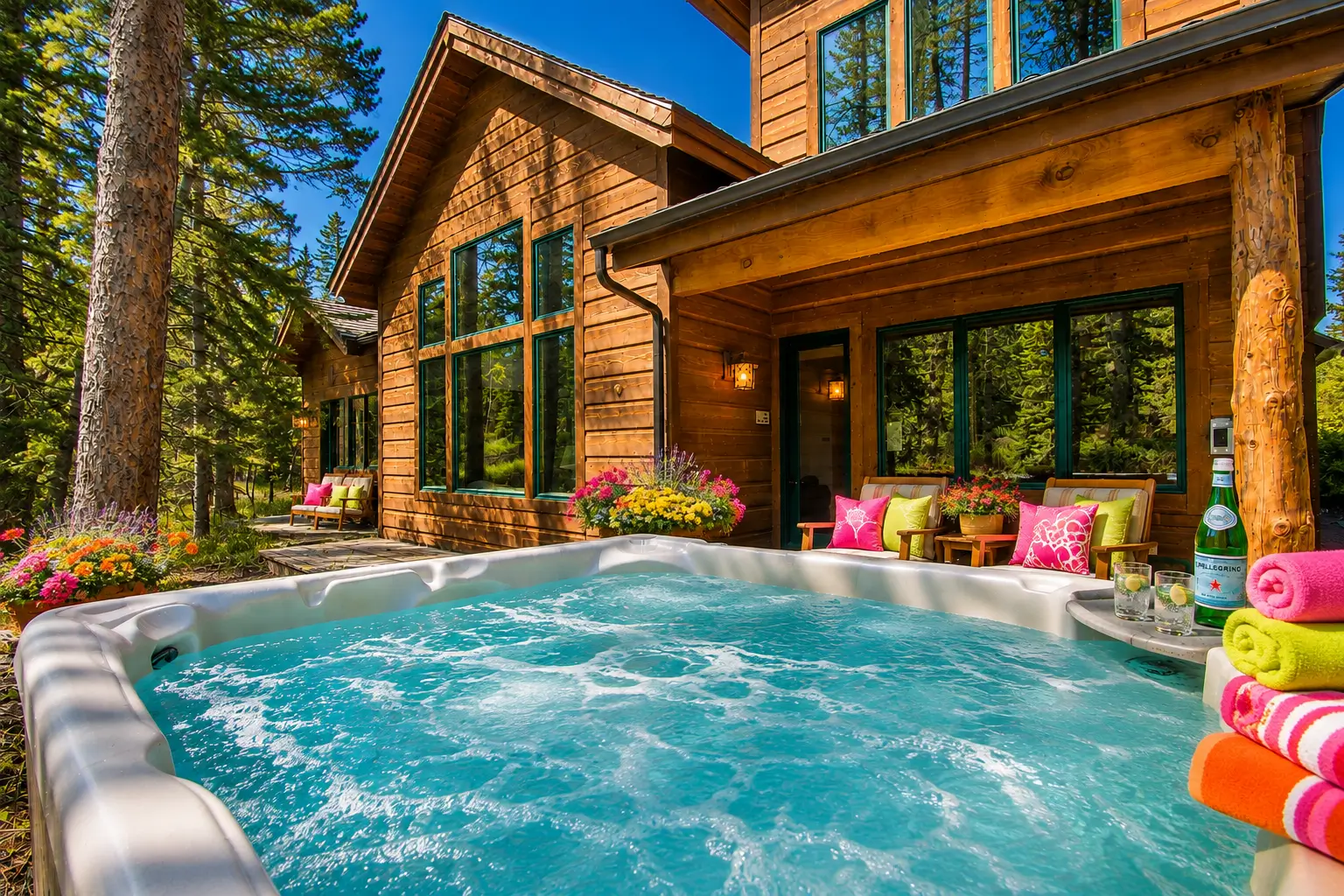
Understanding Breckenridge's Short-Term Rental Regulations
A Breckenridge STR license is required for any rental under 30 consecutive days. The license attaches to the property owner – not the address. When a property sells, the license does not transfer. Every new owner starts fresh, regardless of how long the prior owner held the license or how strong the rental history was.
STR License Caps and Geographic Overlay Zones
Breckenridge divides its Breckenridge short term rental investment landscape across four zones with very different availability:
| Zone | License Cap |
Current Status (2026) |
Resort Zone |
No cap |
Unlimited – purpose-built ski complexes only |
Zone 1 |
Capped |
Licenses available; 92% of units eligible |
Zone 2 |
Capped |
Waitlist – years-long wait |
Zone 3 |
Capped |
Waitlist – years-long wait |
Resort Zone covers properties purpose-built for tourism: One Ski Hill Place, Beaver Run Condos, Crystal Peak Lodge, and similar ski-adjacent complexes. Zone 1 encompasses Warriors Mark, parts of Historic Downtown, and the Four O'Clock corridor – a broader mix of condos and single-family homes where licenses remain obtainable.
License fees in Breckenridge combine two charges: the Business and Occupational License Tax (BOLT), which runs $75 for a studio to $175 for four or more bedrooms, plus a regulatory fee of $756 per bedroom annually. A two-bedroom property costs roughly $1,512 per year in regulatory fees alone, before BOLT. Occupancy is capped at two persons per bedroom plus four additional guests total. Properties must provide one parking space per bedroom plus one additional – a $300 per-space penalty applies if requirements are not met.
HOA restrictions operate on a separate track from town licensing. A valid Zone 1 STR license does not override an HOA that prohibits short-term rentals. Both layers must be confirmed before any purchase decision.
How to Check a Property's STR Eligibility Before Making an Offer
The zone shown in a listing is not always accurate – verify it independently. Steps before making an offer:
Confirm the STR zone via the Town of Breckenridge's official GIS tool or by contacting the Finance Department directly
Review the HOA's CC&Rs for any prohibition on short-term rentals
Check whether the property is classified as a condotel – ski-in/ski-out condos sometimes carry this designation, which changes financing options
Confirm parking supply meets the per-bedroom requirement
Verify no workforce housing deed restriction applies to the unit
A Breckenridge mailing address does not confirm the property sits within town limits. Some addresses route to unincorporated Summit County, which follows county STR rules rather than the Town's zone structure.
Financing an Investment Property in Breckenridge
Standard investment property financing requires 15-25% down, a minimum 620 credit score, and DTI qualification using personal income. At Breckenridge price points – median condo around $777,500, single-family well above $1 million – that down payment requirement lands between $116,000 and $250,000 before closing costs. Conventional investment property mortgage rates run 0.5-1.0% above primary residence rates; at a primary rate of 6.75%, expect 7.25-7.75% on a standard investment loan. FHA and VA loans are not available for investment properties.
DSCR Loans and Other Investor-Friendly Financing Options
A DSCR loan qualifies on the property's rental income rather than the borrower's tax returns or W-2 income. The formula is straightforward: monthly rental income divided by monthly PITIA (principal, interest, taxes, insurance, HOA). A ratio of 1.0 means the property breaks even on paper; above 1.0 signals positive cash flow coverage.
For Breckenridge specifically: a $1.1 million property generating $6,200 per month in projected STR income produces a DSCR of approximately 1.20 – qualifying territory for most programs. Some lenders accept AirDNA projections for STR income rather than requiring an existing rental history, which matters for buyers purchasing unlicensed properties that they intend to license.
DSCR loans suit Breckenridge investors for several reasons beyond income flexibility. Properties can be held in an LLC – most DSCR programs allow entity ownership, which the majority of conventional programs do not. Self-employed buyers, portfolio investors, and foreign nationals all qualify on the same terms as W-2 earners. Down payments typically run 20–25%.
One financing risk worth flagging early: ski-in/ski-out condos in Resort Zone complexes are sometimes classified as condotels by lenders. Condotel classification removes conventional and DSCR financing options and pushes buyers toward portfolio loans, which carry higher rates and tighter terms. Confirm the property's lender classification before structuring a purchase offer around specific financing.
Best Locations for Breckenridge Investment Properties
Zone and proximity to the lifts are the two variables that determine both rental income potential and resale value for investment properties in Breckenridge CO.
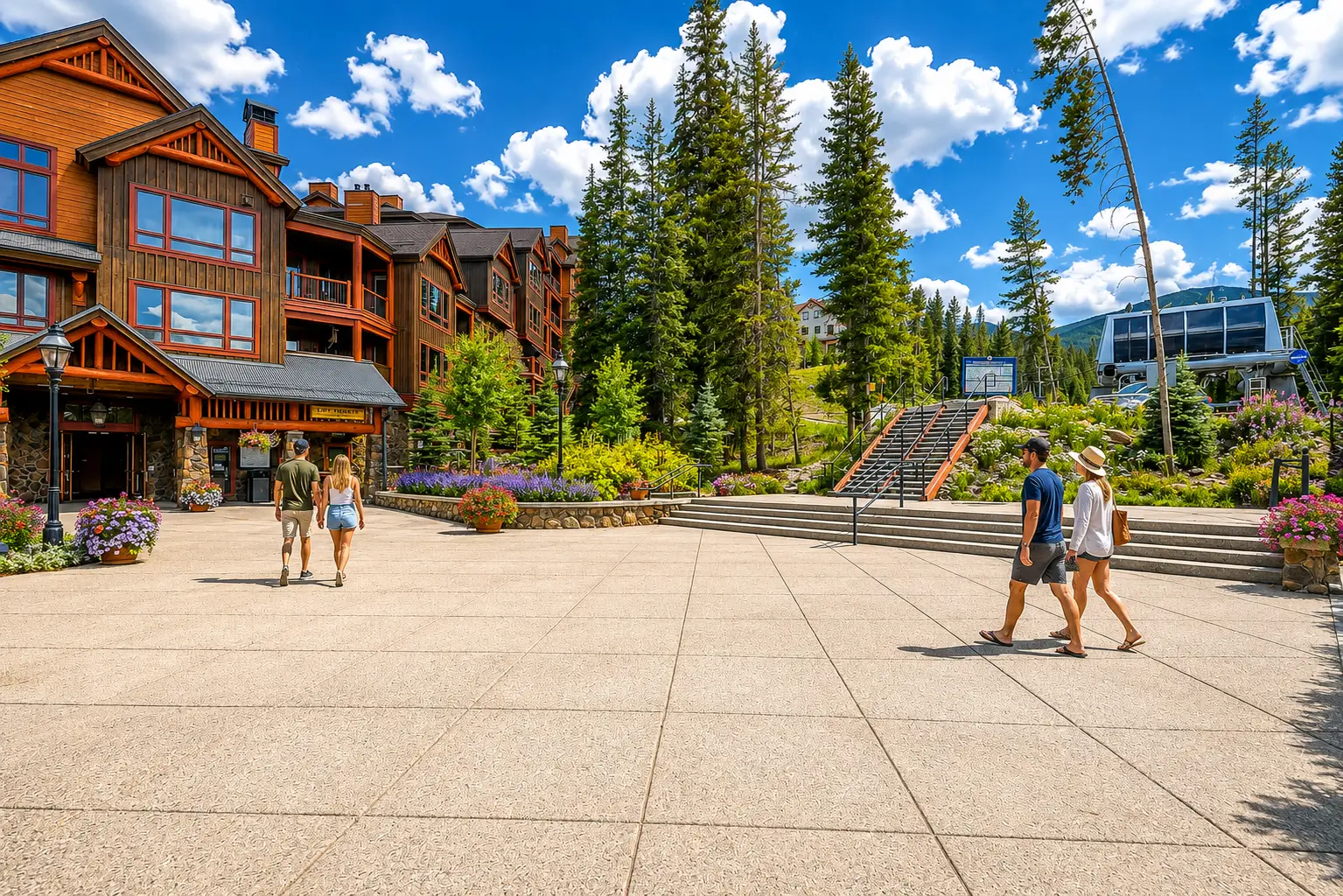
Resort Zone properties – Village at Breckenridge, Main Street Station, Mountain Thunder Lodge, Bluesky at Breckenridge – carry the highest ADR and the most predictable booking patterns. Ski-in/ski-out access commands premium nightly rates; no licensing cap means no waitlist risk. The tradeoff is purchase price: Resort Zone condos are consistently the most expensive inventory in Breckenridge. Browse current Breckenridge condos for sale to see how Resort Zone and Zone 1 inventory compares at current price points.
Zone 1 offers more entry-point flexibility. Warriors Mark, portions of Historic Downtown, and the Four O'Clock area all fall within Zone 1, with a mix of condo, townhome, duplexes, and single-family options at a broader price range. As of 2026, Zone 1 licenses remain available – meaning a buyer can apply and receive a license without joining a waitlist. That availability will not last indefinitely as the zone fills toward its cap.
Breckenridge investment properties in Zones 2 and 3 should be approached with caution for STR purposes. The waitlist in both zones is measured in years, and the license still does not transfer at sale. A property purchased in Zone 2 with the expectation of eventually obtaining a license is a speculative play on regulatory change, not a near-term income investment.
Resort Real Estate works with investors across Breckenridge to confirm STR zone, HOA rental rules, and licensing status before any offer goes in. Contact the team at 970-389-8899 or email summitrealty@luckymountainhome.com.
Estimating Rental Income and Occupancy
Breckenridge rental property investment returns look different depending on which data source you use – and all of them are accurate for different property types and seasons.
AirROI's trailing twelve-month data through January 2026 puts average annual STR revenue at $59,943, with 40% occupancy and a $544 average daily rate across 3,051 active listings. A separate analysis using a $585 ADR and 37.9% occupancy produces $61,416 annually. LocalVR's more conservative estimate – $172 median nightly rate at 65% occupancy – produces $40,736 per year. The spread between these figures reflects the difference between a well-positioned Resort Zone condo and an average listing across all property types and zones.
Seasonality is the variable that matters most. February occupancy runs 89.3%. May drops to 23.3%. The annual average obscures a shoulder-season revenue problem that catches first-time investors off guard: April, May, October, and November generate enough income to cover utilities and carrying costs, but not much more. Investors who underwrite Breckenridge STR income on annual averages rather than monthly models consistently over-project cash flow.
Peak-season revenue – $3,000-$8,000 per week during Christmas, Presidents' Week, and spring break – subsidizes the slower months. A property that generates $15,000 in February and $3,000 in May still produces strong annual figures, but the lumpiness of that income requires adequate cash reserves between peaks.
Operating Costs to Budget For
Gross STR revenue is not net income. The gap between the two is where most Breckenridge investor projections break down.
Property management fees in Colorado mountain markets run 20-30% of gross revenue. On $55,000 annually, that is $11,000-$16,500 before any other expense. STR license fees add roughly $1,500-$2,000 per year for a two-bedroom property. Lodging taxes – collected and remitted separately to Summit County and the Town of Breckenridge – come off every booking. HOA fees for established Resort Zone complexes run $300-$1,000+ per month. Insurance on a mountain property in a wildfire exposure area runs above Colorado's already-elevated state average of $3,956 per year.
Cleaning and turnover costs $150-$300 per booking depending on property size and configuration – a unit turning over twice per week in February generates real cleaning expense that belongs in the model. Snow removal, HVAC servicing, deck maintenance, and the general faster depreciation of a property running as a high-turnover rental all add to the annual cost basis.
A realistic net operating income on a Breckenridge STR, after management, taxes, HOA, insurance, and maintenance, typically runs 50-60% of gross revenue. That is the number to underwrite – not the gross figure from AirDNA.
Working With a Local Investment Property Specialist
The investment property in Breckenridge CO market requires local knowledge that general real estate data does not provide. Zone status changes, HOA rental rule amendments, condotel classification nuances, and the licensing fee structure all affect whether a specific property works as an STR investment – and none of that information appears in a standard MLS listing.
A local specialist confirms zone and HOA status before the inspection period closes, not after earnest money goes hard. They know which complexes carry condotel classification and which lenders work with those properties. They track which Zone 1 properties are approaching cap limits and which Resort Zone complexes have pending HOA rule changes that could affect rental permissions.
For out-of-state investors evaluating Breckenridge investment properties remotely, that on-the-ground knowledge is the difference between a property that performs as projected and one that sits unlicensed for years while a waitlist clears.
Buyers considering investment properties in Breckenridge, Keystone, Frisco, Dillon, Silverthorne, or Copper Mountain benefit from working with a team that understands STR regulations and rental returns in each submarket. Contact Resort Real Estate Inc. at 970-389-8899 or email summitrealty@luckymountainhome.com before making an offer.
Frequently Asked Questions
Do I need a STR license to rent out a property in Breckenridge?
Yes. Any rental under 30 consecutive days requires a valid Breckenridge STR license. The license is tied to the owner, not the address – it does not transfer when the property sells. Operating without one risks fines, suspension, and revocation.
How much down payment is needed for an investment property in Breckenridge?
Conventional investment loans require 15-25% down. DSCR loans typically require 20-25%. At a $777,500 condo median, that is $155,000-$194,000 before closing costs. Properties above the $1,009,750 Summit County conforming limit require jumbo or portfolio financing.
Which Breckenridge neighborhoods have the best rental income potential?
Resort Zone properties – One Ski Hill Place, Beaver Run, Mountain Thunder Lodge, Village at Breckenridge, Bluesky, Main Street Station, Crystal Peak Lodge – produce the highest ADR and have no licensing cap. Breckenridge investment properties in Zone 1 offer more entry-point flexibility with licenses still available. Zones 2 and 3 are waitlisted and not suitable for near-term STR investment.
What ongoing costs should investors expect for a Breckenridge rental property?
Property management runs 20-30% of gross revenue. Add STR license fees ($1,500-$2,000/year for a 2BR), HOA fees ($300-$1,000+/month), lodging taxes, insurance, and cleaning costs. Net operating income typically runs 50-60% of gross revenue after all operating expenses.
Can I use an investment property in Breckenridge for personal vacations too?
Yes, but usage affects tax classification. Buying a rental property in Breckenridge for personal use beyond 14 days per year shifts the IRS classification toward second home, which changes which deductions apply. Heavy personal use also reduces rentable nights and annual income. Track personal days carefully against the 14-day IRS threshold.