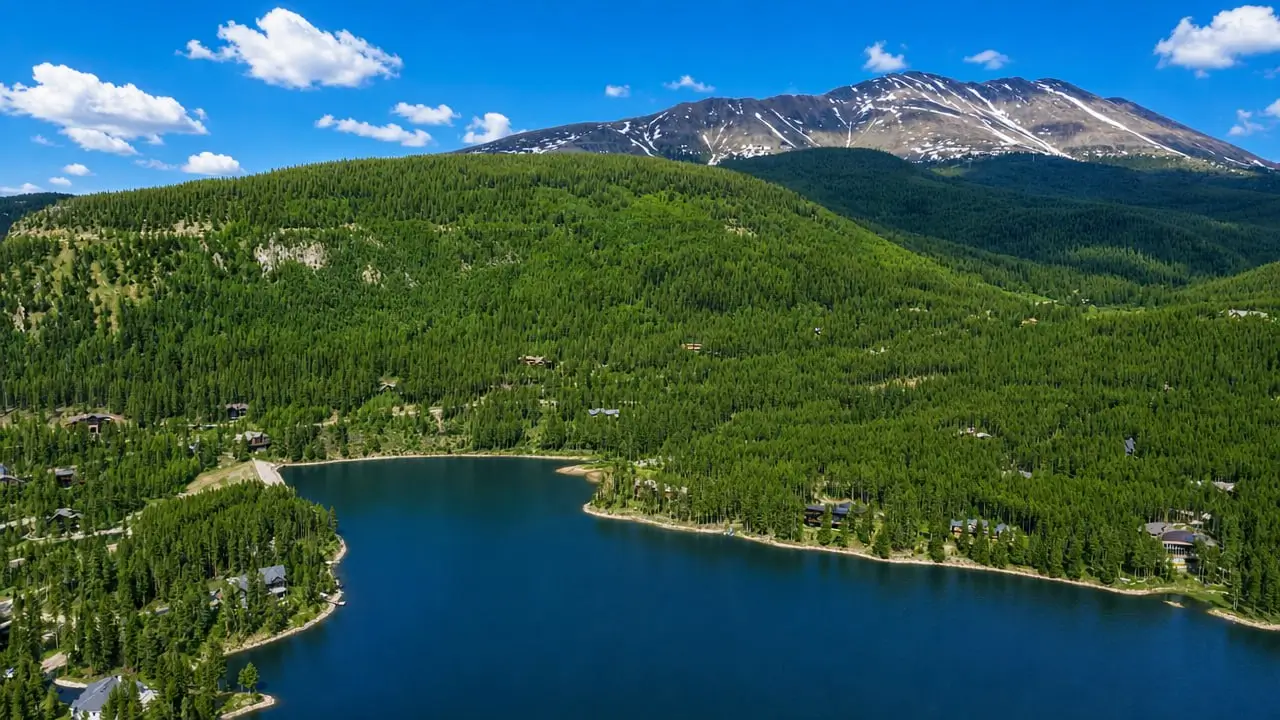
Energy-Efficient Home Upgrades That Reduce Utility Costs In Summit County, CO
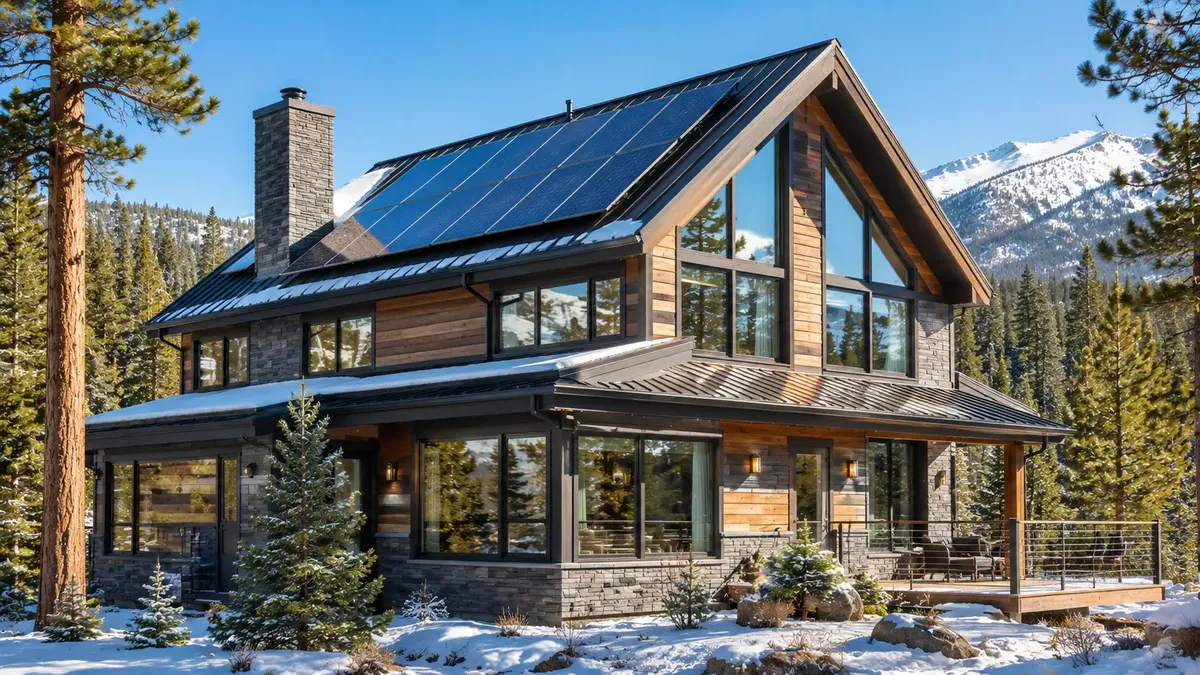
Energy-efficient home upgrades do more than lower utility bills – they affect comfort, maintenance costs, insurance premiums, and resale value. In mountain communities such as Breckenridge, Keystone, Copper Mountain, Frisco, Dillon and Silverthorne in Summit County, where heating systems run hard for more than six months and temperature swings between seasons are significant, the payoff from the right upgrades compounds faster than in the regions with warmer climates. This article covers which energy efficient home upgrades deliver the biggest returns, what matters specifically for Summit County mountain homes, and which improvements buyers notice at resale.
Why Energy-Efficient Home Upgrades Matter
Heating and cooling account for approximately 43% of the average household utility bill. That single figure explains why energy efficient home upgrades focused on thermal performance – insulation, air sealing, windows, and HVAC – consistently outperform cosmetic renovations in terms of measurable financial return.
Energy Efficient Upgrades for the Home That Deliver the Biggest Savings
Energy efficient upgrades for the home with the strongest documented savings, ranked by typical impact:
- Insulation and air sealing – EPA ENERGY STAR data shows air sealing combined with insulation saves ~15% on heating and cooling costs (~11% of total energy); DOE estimates cutting air leaks alone reduces energy use by 10-20%
- HVAC system upgrade – heating and cooling are 43% of the bill; a high-efficiency system or heat pump delivers immediate impact on the largest cost line
- Smart thermostat – saves 10-12% on heating and 15% on cooling annually with no structural changes required
- Triple-pane or Low-E windows – ENERGY STAR windows cut heating and cooling costs up to 13%, saving $125-$465/year depending on climate and home size; U-factor below 0.30 is the target for cold climates
- Duct sealing – typical homes lose 20-30% of conditioned air through leaky ductwork (DOE); sealing recovers that loss directly
Energy-Efficient HVAC Upgrades for Better Performance
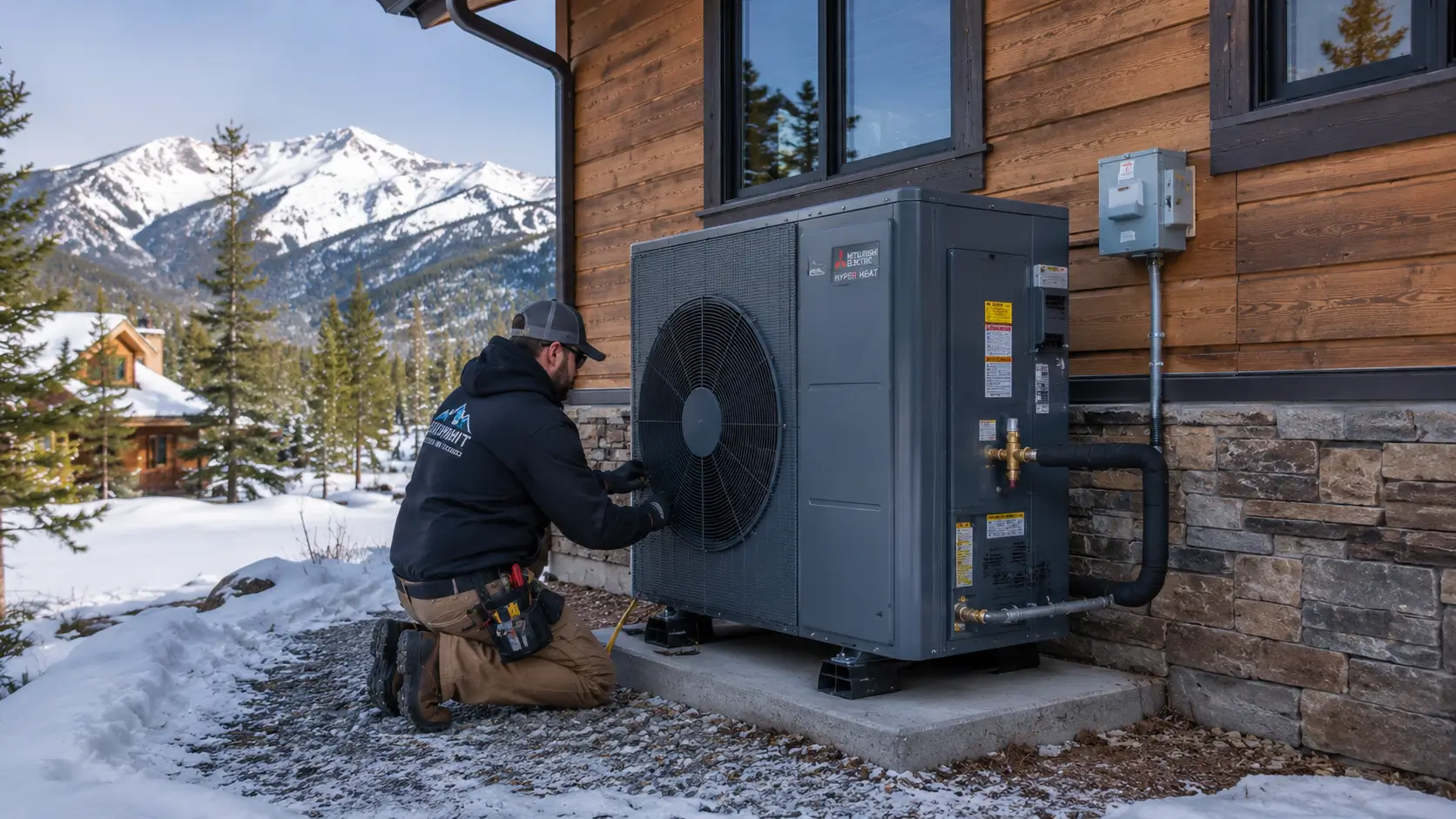
Energy-efficient HVAC upgrades are the highest-impact category for mountain homeowners. At Summit County elevations, mechanical systems work harder than anywhere on the Front Range – and an outdated or undersized system pays that penalty in energy costs every month.
High-Efficiency Heating and Cooling Systems
Modern cold-climate heat pumps have changed the calculus for Colorado mountain homes. According to DOE research, current cold-climate models maintain 100% heating capacity at 5°F and operate efficiently down to -13°F – performance that was not available in earlier generations of the technology. Heat pumps both heat and cool, replacing two separate systems with one, and they run on electricity rather than combustion fuel.
At altitude, heat pumps require careful sizing. Mechanical equipment loses approximately 4% of its rated capacity per 1,000 feet of elevation – at 9,000 feet, that is a 36% capacity reduction from sea-level ratings. A contractor unfamiliar with mountain installs who sizes from the nameplate rather than the altitude-corrected output will install an undersized system. Backup heat is also required for the coldest days in Summit County, where temperatures regularly drop below the 10-20°F threshold where most heat pumps require supplemental heating.
Duct Sealing, Ventilation, and Indoor Air Quality
Duct leakage is one of the most consistently underestimated sources of energy waste in mountain homes. The DOE estimates that typical homes lose 20-30% of conditioned air through leaks, gaps, and poorly connected ductwork – air that has already been heated or cooled at full cost, then lost before it reaches the living space.
Ventilation matters alongside sealing. Tightening a home’s envelope without addressing fresh air exchange creates indoor air quality problems – elevated CO2, humidity buildup, and in Colorado’s geology, radon accumulation. Energy Recovery Ventilators (ERVs) exchange stale indoor air with fresh outdoor air while recovering 70-80% of the thermal energy, maintaining efficiency without sacrificing air quality.
Energy-Efficient Kitchen Upgrades That Lower Daily Costs
Energy-efficient kitchen upgrades target the appliances that run daily – refrigerator, dishwasher, and cooking equipment – where small efficiency gaps accumulate into meaningful annual costs. ENERGY STAR-certified refrigerators use approximately 9% less energy than standard models; dishwashers use 12% less water and proportionally less energy for heating it. For mountain vacation properties that sit empty for weeks at a time, a smart refrigerator with adjustable temperature modes and a vacation setting reduces standby consumption significantly.
Induction cooktops are the highest-impact kitchen upgrade for energy efficiency – they transfer 85–90% of energy directly to the cookware versus 40-55% for gas or standard electric. For Summit County properties transitioning away from propane – increasingly common as Colorado pushes toward electrification – induction eliminates a combustion appliance and the safety considerations that come with it at altitude.
Energy-Efficient Lighting Upgrades for Modern Homes
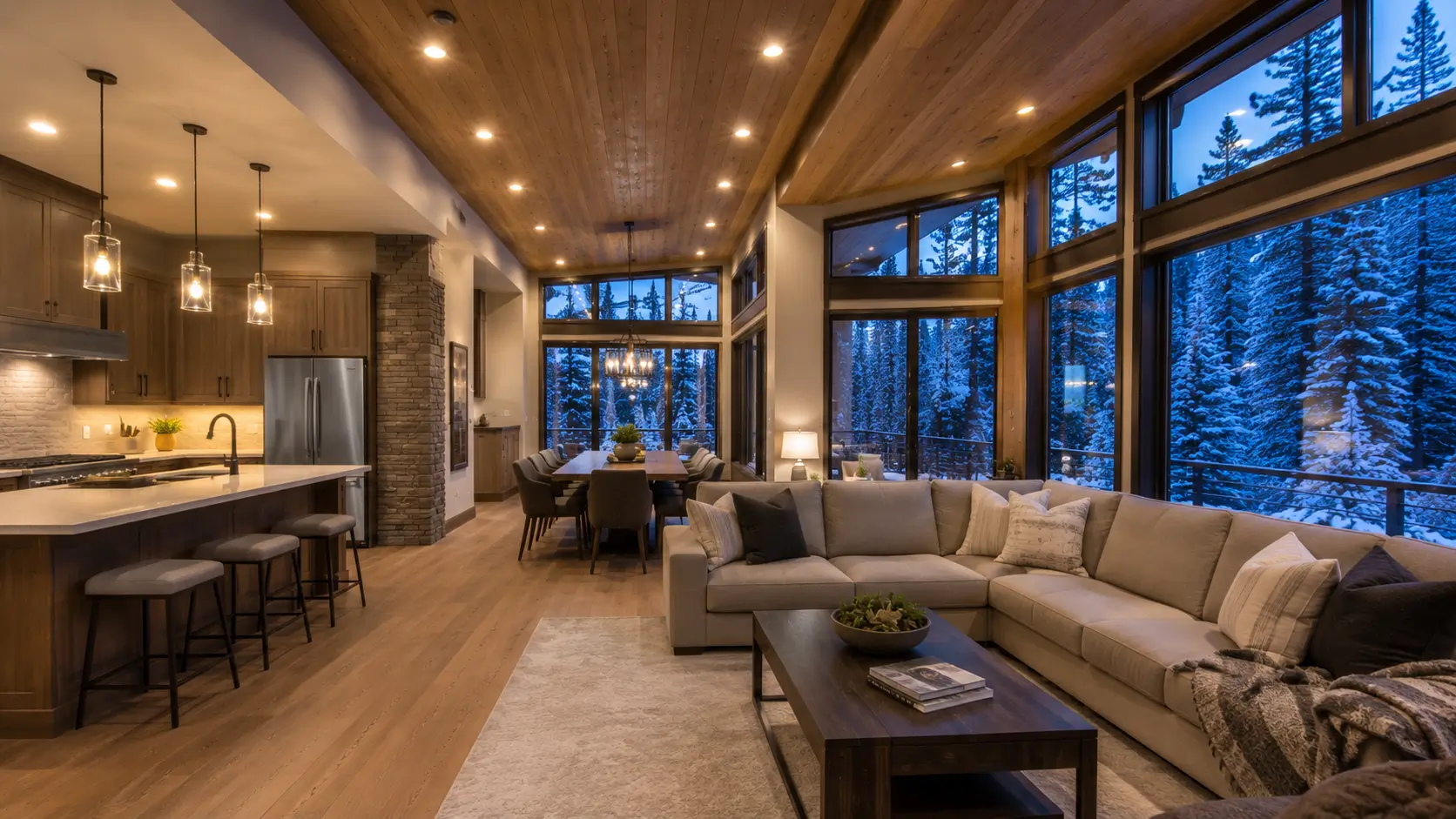
Energy-efficient lighting upgrades are the lowest-barrier entry point into home efficiency – and one of the fastest-payback improvements available. LED bulbs use 75% less energy than incandescent equivalents and last 25 times longer, according to DOE data. A full home transition from incandescent to LED typically costs under $200 and reduces lighting-related energy consumption by 70-75%.
For mountain vacation homes that are unoccupied for extended periods, energy-efficient lighting upgrades pair effectively with smart lighting systems – motion sensors, scheduling, and remote control prevent lights from running in empty spaces. Smart lighting also gives remote owners visibility into whether lights were left on after a guest checkout, without requiring a property visit.
Exterior lighting at Summit County elevations takes more weather abuse than at lower altitudes – freeze-thaw cycles, heavy snow loads, and UV exposure at high elevation degrade fixtures faster. LED fixtures rated for cold-climate operation last significantly longer than standard outdoor fixtures in these conditions.
Buyers looking for mountain homes that already incorporate modern efficiency systems avoid the upgrade costs entirely. Resort Real Estate works with buyers across Summit County to identify properties with current insulation, HVAC, and energy systems – contact the team at 970-389-8899 or nbassova@gmail.com.
Energy Efficient Upgrades for Your Home in Mountain Climates
Energy efficient upgrades for your home in a mountain climate require a different priority order than in a mild-weather region. The variables that matter most – snow load, altitude, temperature range, and building code requirements – shape which improvements deliver real savings and which ones under perform relative to their cost.
Snow Load, Insulation, and High-Altitude Weather Challenges
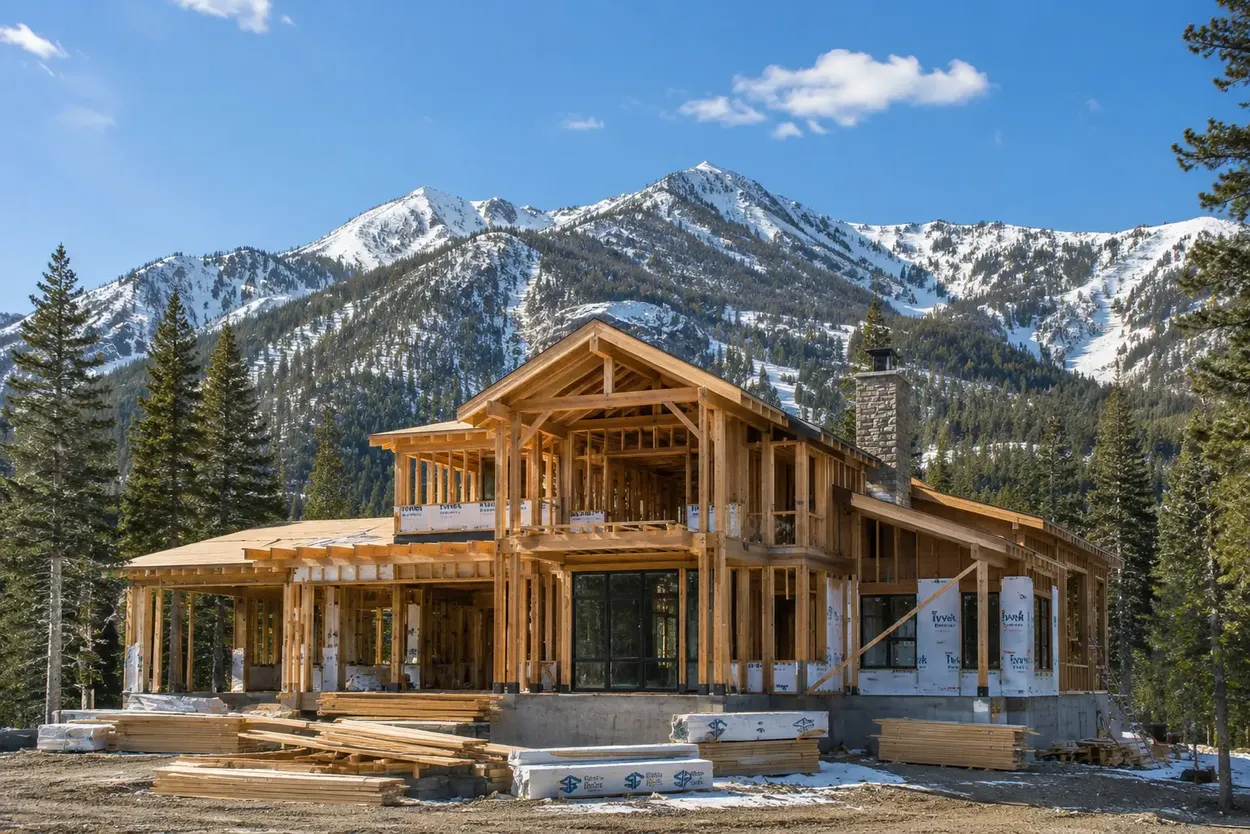
Summit County roofs are engineered for 40+ PSF snow load – a structural requirement that also affects insulation strategy. A roof carrying that load needs insulation installed in a way that does not compromise structural integrity or create ice dam conditions. Inadequate attic insulation in a mountain home causes heat to escape through the roof, melt the underside of snow, and refreeze at the eaves – producing ice dams that force water under roofing materials.
Proper attic insulation in Summit County means achieving R-49 to R-60 values depending on the specific construction type, combined with air sealing at every penetration point. Wall insulation in mountain homes benefits from continuous exterior insulation layers that eliminate thermal bridging – the path heat finds through studs and framing even when cavity insulation is correctly installed.
Triple-pane windows with low U-factors (below 0.30) and Low-E coatings are the standard for new construction in Summit County and a meaningful upgrade for older properties. At 8,000-9,000 feet, temperature differentials across glass surfaces are more extreme than at lower elevations – the condensation, frost, and heat loss that occur at poorly insulated windows are more pronounced and more costly.
Why Colorado Homes Often Require Higher Energy Standards
Colorado’s building code landscape has shifted significantly. State legislation HB22-1362 requires local governments to adopt the 2021 International Energy Conservation Code by 2026, prompting jurisdictions across Summit County to update their full suite of building codes simultaneously. Summit County applies the 2018 ICC series alongside a Sustainable Building Code for all new single-family construction.
The Colorado Wildfire Resiliency Code, effective July 1, 2025, adds fire-resistant construction requirements for properties in wildland-urban interface zones – which covers substantial portions of Summit County. Some fire-resistant materials also carry thermal performance benefits, creating overlap between wildfire compliance and energy efficiency.
Which Energy Efficient Upgrades Increase Home Value?
Energy efficient upgrades that translate most directly into resale value are the ones buyers can verify and quantify: HVAC system age and efficiency rating, insulation R-values, window specifications, and utility bill history. In Summit County’s market – where the May 2026 median sale price for single-family home sits at $1,900,000 – buyers at this price point expect modern mechanical systems as a baseline, not a selling point.
The upgrades with the strongest resale impact in cold-climate mountain markets:
- HVAC replacement – a system within its useful life with documented efficiency ratings removes a negotiation point for buyers and their inspectors
- Insulation and air sealing – verifiable through a home energy audit; properties with documented efficiency scores command stronger offers in competitive markets
- Triple-pane windows – visible, quantifiable, and immediately noticed by buyers during showings in cold weather
- Smart thermostat and energy monitoring – low cost, high visibility; signals to buyers that the home has been actively managed
In cold-climate zones, energy efficient upgrades for heating and thermal envelope deliver stronger ROI at resale than the same investments in warm markets – the systems are used harder, the savings are larger, and buyers understand the value more intuitively.
Buyers and owners in Breckenridge, Keystone, Frisco, Dillon, Silverthorne, and Copper Mountain working on energy upgrades – or looking for properties that already have them – benefit from local expertise on both mountain construction and the current housing market. Contact Natalia Bassova with over 21 years of experience with Resort Real Estate Inc. at 970-389-8899 or Send e-mail nbassova@gmail.com
Disclosure: Please note, that this information is provided for general informational purposes only. It does not constitute professional advice. You are strongly encouraged to verify all information with qualified and certified industry professionals before making any decisions or taking any actions.
FAQ
Are energy-efficient HVAC upgrades worth the upfront cost?
In Summit County, yes. Energy-efficient HVAC upgrades at 8,000-9,000 feet recover costs faster because systems run harder and longer than at lower elevations. Colorado state heat pump credits and Xcel’s Mountain Energy Project rebates (up to $7,500/ton in Summit County ZIP codes) reduce upfront investment significantly.
Do energy-efficient upgrades increase resale value?
Documented upgrades – insulation R-values, HVAC efficiency ratings, window specifications – directly affect buyer negotiations and appraisals in cold-climate markets. Summit County buyers at the $940,000+ median price point expect modern systems; properties without them absorb price reductions at inspection.
How often should insulation and HVAC systems be updated?
HVAC systems typically have a 15-20 year useful life; efficiency drops measurably in the final years. Insulation should be assessed after any roof or wall work and whenever energy bills increase unexpectedly. Mountain homes experience more thermal stress than lower-elevation properties – inspect both on a 5-year cycle.
What energy upgrades matter most in colder mountain climates?
Insulation and air sealing first – they reduce the load on every other system. Then HVAC sizing and efficiency for altitude-corrected capacity. Triple-pane windows third, particularly on north and west-facing exposures. Smart thermostats and LED lighting deliver fast payback with minimal installation complexity.