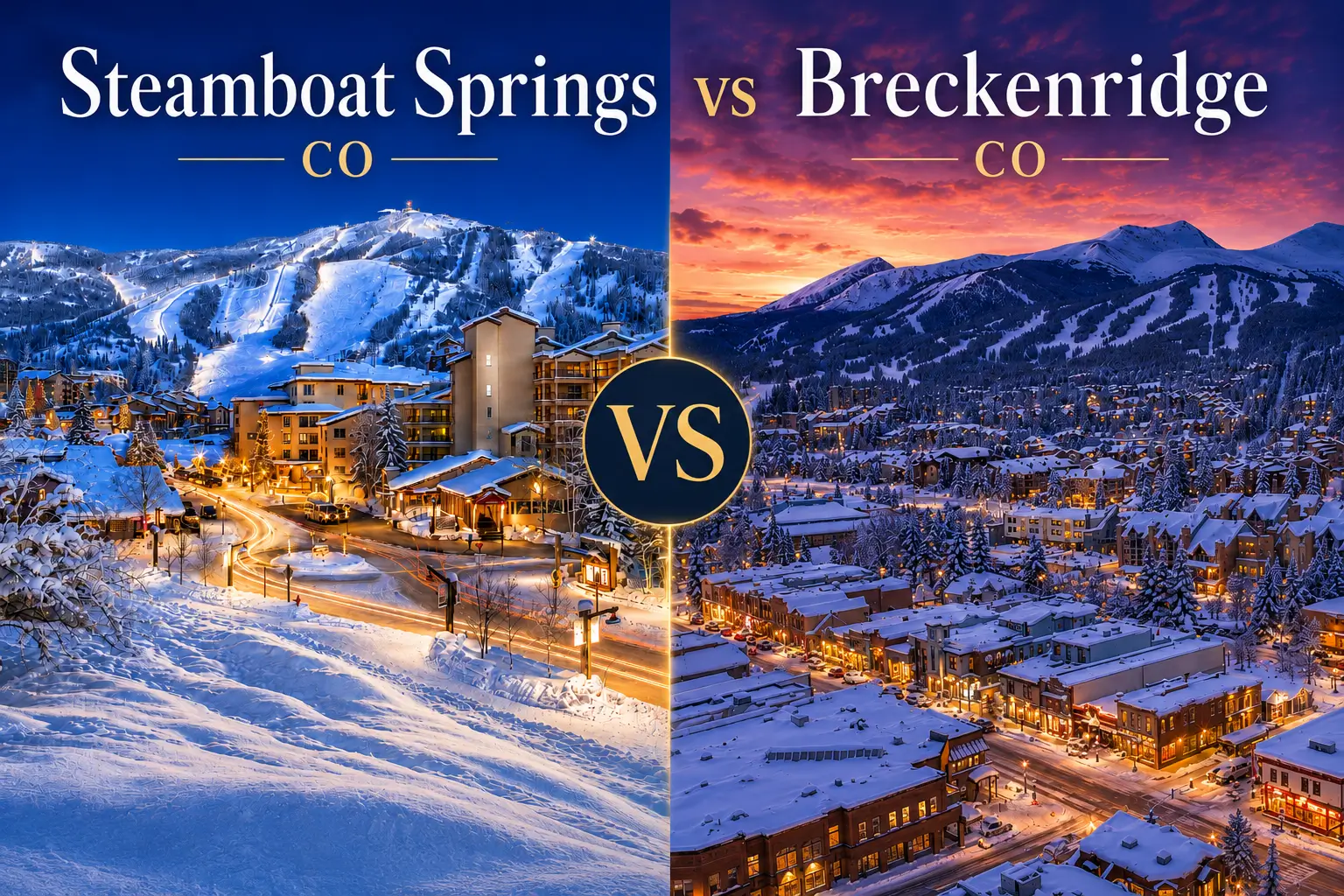
Your Step-by-Step Guide: How to Build a Custom Home in Summit County Colorado
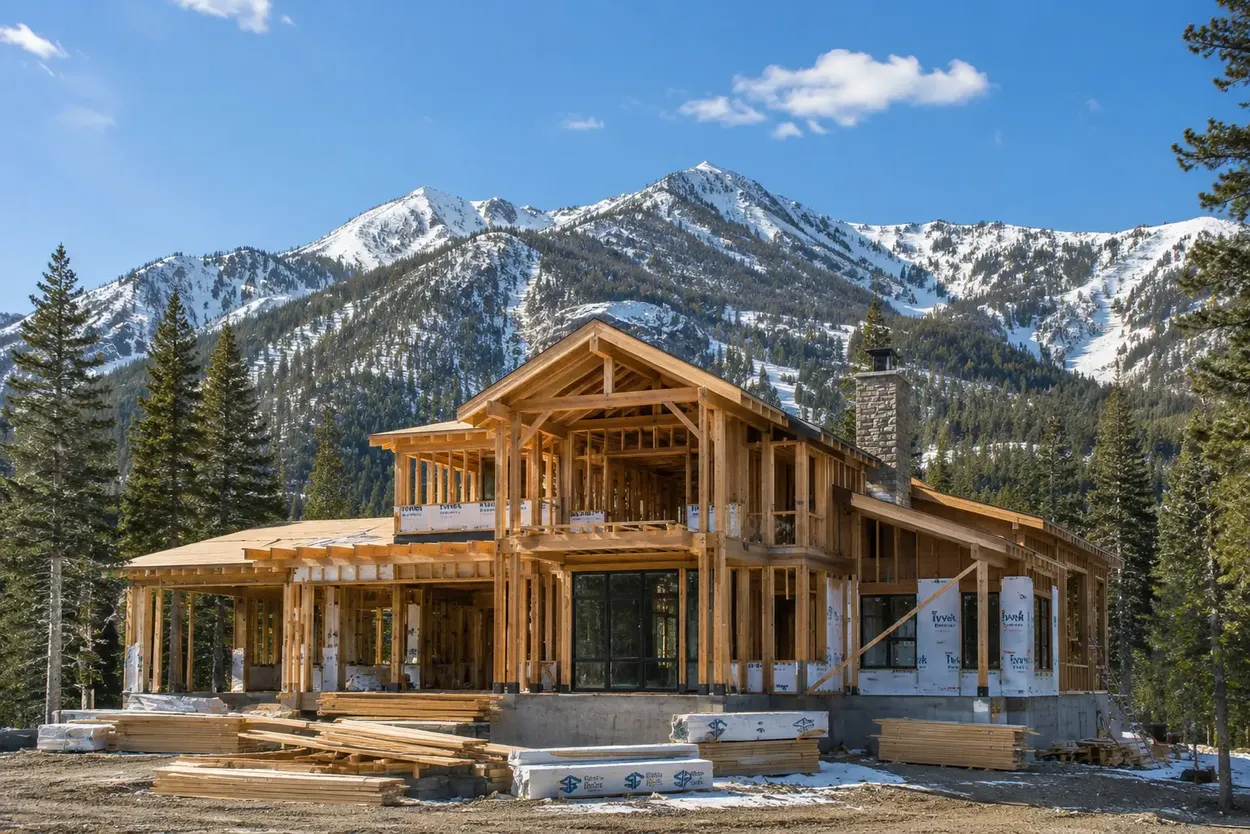
Building a house in Colorado at elevation requires a different kind of planning than anywhere else in the state. Summit County adds mountain-specific layers to every phase: jurisdiction-dependent permit workflows, seasonal construction windows, snow load engineering, and utility access that varies by parcel. The cost of building a house in Colorado in this market starts at $350 per square foot for construction alone – before land, site preparation, building permits, or fees. This guide walks through the full process, from choosing a lot to receiving a certificate of occupancy.
Building a House in Summit County Colorado: What Buyers Should Know First
The first thing that surprises buyers who want to build a home in Colorado’s mountain communities: there is no single permit process. Each jurisdiction in Summit County operates independently, and the rules differ in ways that directly affect timeline and cost. Before starting any project, find out what jurisdiction the property belongs to. Use a search tool on the Summit County website.
Breckenridge manages new residential permits through its Building Access Portal – an online system covering structural, electrical, mechanical, and plumbing applications. The Town of Frisco accepts building permit applications through its Community Development department; note that solar and photovoltaic applications in Frisco route separately through Summit County rather than the town. Silverthorne handles permits through its Community Development Building Division. Keystone falls under the Keystone Metropolitan District for building permits. Dillon routes applications through its Planning and Zoning Department.
How Much to Build a House in Summit County Colorado by Project Type
How much to build a house in Colorado varies significantly by project type, finish level, and site conditions. In Summit County, the starting point is higher than anywhere else in the state – and the variables that push costs up are structural, not cosmetic.
Custom Homes vs Modular/Manufactured Homes
The cost to build a house in Colorado in Summit County breaks down by build type:
|
Home Type |
Cost Per Sq Ft |
|
Standard custom (basic finishes) |
$350-$500 |
|
High-end custom (premium finishes) |
$500-$600+ |
|
Luxury build (complex site, top materials) |
$600+ |
Modular and manufactured construction runs $200-$300/sq ft in other parts of Colorado but rarely applies in Summit County. HOA restrictions, mountain terrain, and local code requirements effectively limit new construction here to site-built custom homes. Custom builds start at roughly 30% more per square foot than tract homes – and that premium widens with site complexity.
Land, Site Preparation, and Utility Costs
Land pricing in Summit County has no meaningful relationship to Colorado state averages. Buildable lots in Breckenridge, Keystone, and Copper Mountain trade at resort-market premiums that national land cost figures do not capture.
Site preparation adds a separate budget line: clearing, grading, driveway construction, and utility connections run $10,000-$40,000 or more before a foundation is poured. On steep slopes – common across Breckenridge area – excavation costs can exceed the foundation budget itself.
Utility connections carry their own costs. Tap fees for municipal water and sewer in Summit County towns run $10,000-$40,000+. Rural parcels outside incorporated areas require a well and septic system – each requiring separate permits and approvals from Summit County Environmental Health before a building permit is issued. A geotechnical study of the site is required on most mountain parcels before a foundation type can even be selected.
How to Build a Home in Summit County Colorado Step by Step
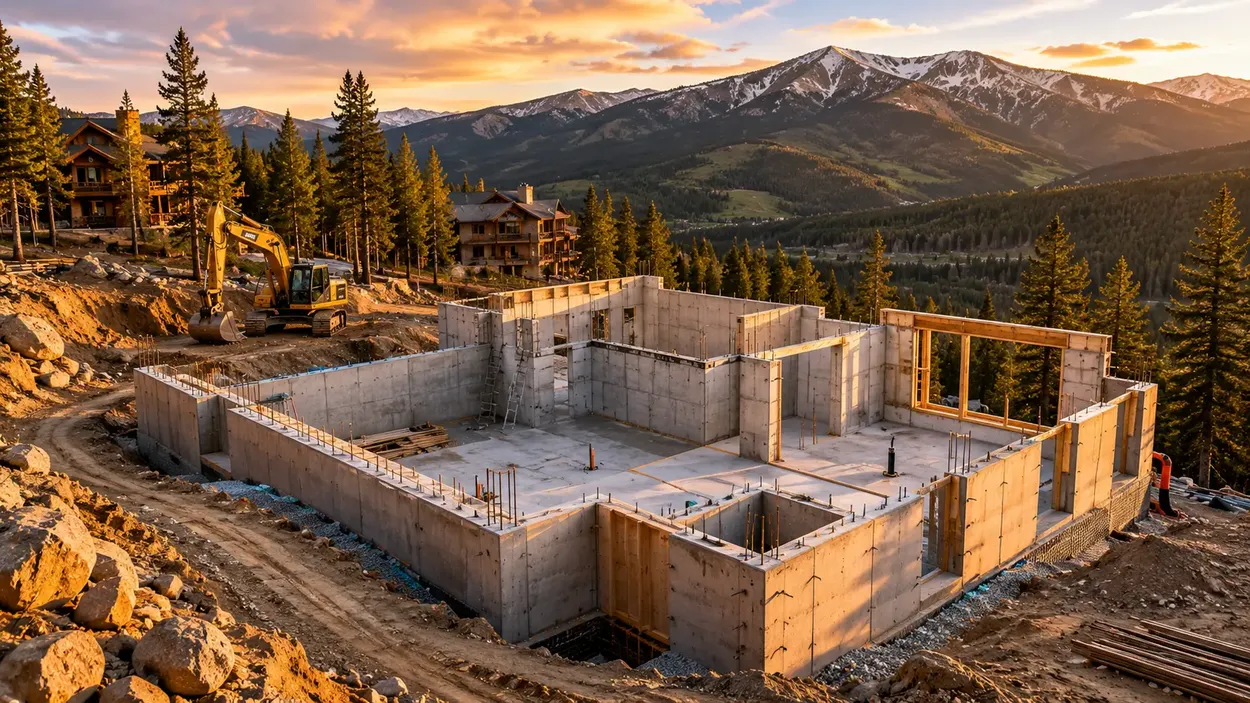
The process is divided into three phases: pre-construction (budget, lot, design), permitting, and construction. In Summit County, each phase runs longer than on the Front Range – plan for 18 to 24 months from initial concept to certificate of occupancy.
Setting Your Budget and Choosing a Lot
The budget comes before the lot search. A construction number without land, site prep, permits, and contingency is not a budget – it is a partial estimate. The complete budget for a Summit County custom build includes:
- Construction cost ($350-$600+/sq ft depending on type and finishes)
- Land purchase
- Site preparation and excavation ($10,000-$40,000+)
- Utility tap fees or well/septic ($10,000-$40,000+)
- Geotechnical study
- Architectural and engineering fees
- Permit fees + Affordable Housing Impact Fee (assessed at permit issuance in Summit County)
- Contingency reserve: 10-15% of total construction cost
Lot selection requires verifying four things before an offer: which jurisdiction issues the permit, whether the parcel is buildable under current zoning, whether utility access exists or needs to be created, and whether STR licensing is available if the owner plans to rent the property. Some parcels that appear buildable carry wetland designations or steep-slope conditions that limit the allowable footprint.
Finding Architects, Builders, and Local Contractors
All new residential construction in Summit County requires stamped drawings from a licensed Colorado architect or structural engineer. That is not optional – plan review will not proceed without them.
Finding a qualified general contractor is the step most buyers underestimate. Builders with mountain experience in Summit County are frequently booked six to twelve months in advance. Starting contractor conversations before purchasing a lot – not after – is the realistic approach in this market. A GC who has built in Breckenridge or Frisco already knows the local subcontractors, the inspection timeline for that jurisdiction, and the material lead times that affect scheduling.
Matching the House Plan to the Land
Terrain dictates plans. A steeply sloped lot in Breckenridge or Blue River requires a stepped foundation with more complex engineering than a flat parcel in Dillon, Frisco, or Keystone. Bringing a standard house plan to a mountain site and expecting it to work without modification adds cost and delay at the plan review stage.
Snow load is the structural constraint that shapes everything above the foundation. Summit County requires roofs designed for 40+ PSF – that calculation belongs to a structural engineer, not the architect alone. South-facing orientations capture passive solar gain, which meaningfully reduces HVAC load at elevations of 8,000-9,000 feet where heating systems already require 10-15% more capacity than at lower altitudes.
Summit County’s plan review checks wetlands presence and steep-slope conditions against the proposed footprint. A lot that passes visual inspection may still carry site restrictions that reduce the buildable area – confirming this before finalizing the house plan saves significant redesign cost.
Colorado Construction Loans and Financing Options
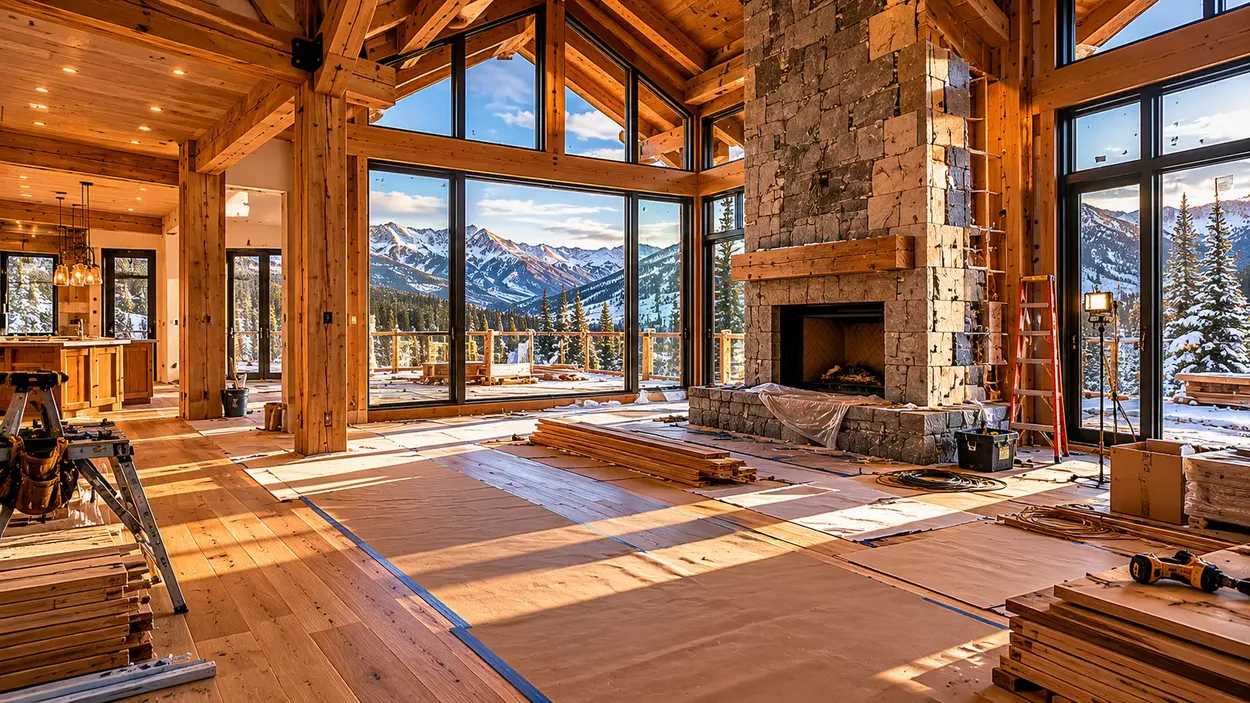
Colorado construction loans work differently from a standard purchase mortgage – funds are disbursed in draws as construction progresses, not as a lump sum at closing.
Construction-to-Permanent Loans
The construction-to-permanent loan – also called a One-Time Close or C2P – is the most common structure for custom builds in Summit County. One closing covers both the construction phase and the permanent mortgage, locking the rate at the start and eliminating a second set of closing costs. The loan converts automatically to a standard mortgage when the certificate of occupancy is issued.
The alternative is a two-close loan: separate closings for the construction phase and the permanent mortgage. That structure offers more flexibility on the permanent rate but adds closing costs and requires the borrower to qualify twice. Most Summit County buyers building at the $1M+ price point use the C2P structure for simplicity.
Equity in a purchased lot often counts toward the down payment requirement on a construction loan. A buyer who owns the land outright – or has significant equity in it – can reduce the cash required at closing. Summit County price points push most projects into jumbo loan territory; lenders with mountain-market experience handle these structures more efficiently than general retail lenders.
Down Payments, Draw Schedules, and Builder Requirements
Down payments on construction loans typically run 20–25% for jumbo projects. Lot equity can cover part of that requirement, depending on the lender.
Draw schedules disburse funds in stages – foundation complete, framing complete, mechanical rough-in, insulation and drywall, and final completion. Each draw requires an inspection before funds are released. Two separate inspectors are involved: the lender’s inspector confirms construction progress for the draw; the county building inspector confirms code compliance for the permit. Both must approve each phase before work proceeds.
Most lenders require a licensed general contractor and a fixed-price construction contract. Owner-builder loans exist but are harder to qualify for and carry stricter reserve requirements. Confirming lender requirements before selecting a GC avoids the situation where a preferred builder’s contract structure is incompatible with the loan terms.
Colorado Building Codes Residential Buyers Should Understand
Colorado building codes residential construction does not follow a single statewide standard. Colorado is a home-rule state – each municipality adopts its own version of the International Residential Code with local amendments. What applies in Breckenridge differs from what applies in Frisco, which differs from unincorporated Summit County.
At the state level, Colorado adopted the 2021 ICC codes – including the IBC, IRC, IMC, IPC, IFGC, and IECC – effective 2024. State legislation HB22-1362 requires local governments to adopt the 2021 International Energy Conservation Code by 2026, which is prompting many jurisdictions to update their full suite of building codes simultaneously. Summit County applies the 2018 ICC series alongside a Sustainable Building Code that every new single-family home must meet.
Several code requirements specific to mountain construction affect budget and design in ways that Front Range projects do not encounter:
- Snow load: Summit County structures must be engineered for 40+ PSF – significantly higher than Denver or Colorado Springs requirements; structural engineers, not architects, carry this calculation
- HVAC derating: mechanical equipment loses approximately 4% capacity per 1,000 feet of elevation; at 8,000-9,000 feet, systems must be sized 10–15% above standard capacity
- Wildfire Resiliency: the Colorado Wildfire Resiliency Code (CWRC), effective July 1, 2025, sets minimum fire-resistant construction standards for properties in wildland-urban interface zones – which covers substantial portions of Summit County
- Sprinkler systems: as of May 2026, any new Summit County home at or above 4,500 square feet must include a fire sprinkler system
- Radon mitigation: many Colorado jurisdictions require passive radon mitigation systems in new residential construction; verify with the AHJ for the specific parcel
The practical implication: never assume a contractor or architect knows the local amendments for your specific jurisdiction. Confirm code requirements directly with the Authority Having Jurisdiction before finalizing construction drawings.
Resort Real Estate helps buyers compare buildable land, existing homes, and new construction opportunities across Summit County – with current data on permit timelines, submarket conditions, and build-vs-buy economics. Contact the team at 970-389-8899 or nbassova@gmail.com.
Build a House in Colorado: Mountain-Specific Challenges
Summit County construction adds categories of complexity that simply do not exist on the Front Range. Two areas account for most of the surprises: utilities and site access.
Septic, Wells, Gas, Electricity, and Internet Access
Utility availability varies by parcel – not by town name or zip code. Incorporated areas generally have municipal water and sewer; rural parcels in unincorporated Summit County may require a well and septic system, each requiring separate approvals from Summit County Environmental Health before a building permit is issued. That sequencing matters: utility approvals are a prerequisite to the building permit, not a parallel process.
Water rights in Colorado follow the prior appropriation doctrine – the right to use water is separate from land ownership and must be established independently. Buyers purchasing rural parcels should confirm water rights status before closing.
Natural gas is available in most incorporated towns. Rural properties typically run on propane or go all-electric. Xcel Energy serves the majority of Summit County for electricity; connecting a remote parcel to the grid can run $5,000–$30,000+ depending on distance from existing infrastructure. In areas where fiber internet has not reached, Starlink satellite is the functional alternative for remote work-capable properties.
Driveways, Snow Storage, Wildlife, and Seasonal Access
Summit County requires a driveway permit for new construction. Maximum driveway slope is approximately 12% in most jurisdictions – steeper grades create safety issues in winter conditions and may not pass review. Width requirements account for fire access, which affects lot layouts on narrow mountain parcels.
Snow storage is not an afterthought – it is a required element of the site plan. Summit County’s plan review checks that adequate space exists to move and store snow without blocking access, neighboring setbacks, or drainage. Sites without sufficient flat area for snow storage have been required to redesign their driveway and parking layouts before permit approval.
Wildlife considerations apply across the county. Breckenridge requires bear-proof waste containers for all residential properties. Some HOAs in Summit County extend wildlife-friendly requirements to fencing specifications and landscaping. These requirements appear in the permit conditions and HOA covenants – not always in the listing description.
Seasonal access constrains the construction calendar directly. Excavation cannot happen on frozen ground. The practical window for site work in Summit County runs from approximately mid-May through October. A project that misses the spring thaw – whether due to late permit approval or delayed contractor scheduling – waits until the following season to begin earthwork. That is not a setback of weeks; it is a setback of months.
Is It Better to Build or Buy a Home in Colorado?
Build a house in Colorado or purchase existing – in Summit County, the answer depends on which submarket and what the numbers show.
Copper Mountain makes the case for building most clearly: $1,010 per square foot on resale, DOM of 7 days, and only 16 active listings in April 2026. When inventory is that constrained, a buildable lot becomes a genuine path to ownership. Dillon tells the opposite story – $647/sq ft resale, DOM 60 days, 11.6 months of supply. At Summit County construction costs of $350–$600+/sq ft, building in Dillon can approach or exceed comparable resale values before land and fees are added.
The April 2026 county-wide resale median is $940,000. For many buyers, purchasing an existing home delivers more value per dollar – particularly in submarkets where resale inventory exists and moves at a reasonable pace. Resort Real Estate runs that comparison with current submarket data before a buyer commits to either path.
Buyers considering building or purchasing in Silverthorne, Breckenridge, Keystone, Frisco, Dillon, or Copper Mountain benefit from local expertise on both sides of that decision. Contact Resort Real Estate Inc. at 970-389-8899 or nbassova@gmail.com before committing to a mountain property.
Disclosure: Please note, that this information is provided for general informational purposes only. It does not constitute professional advice. You are strongly encouraged to verify all information with qualified and certified industry professionals before making any decisions or taking any actions.
FAQ
How long does it usually take to build a house in Summit County, Colorado?
In Summit County, plan for 18 to 24 months from concept to certificate of occupancy. Design takes 2-3 months, permitting 6-10 weeks, and construction 8-12 months. Summit County’s detailed plan review and seasonal excavation constraints consistently push timelines beyond Front Range averages.
Do you need a local builder to build in a Colorado mountain town?
A licensed Colorado general contractor is required. Local experience matters beyond the license – a GC who has built in Summit County knows the jurisdiction-specific inspection process, local subcontractors, and material lead times that affect the schedule. Hiring a Front Range contractor unfamiliar with mountain conditions adds risk to both timeline and code compliance.
Can you build a home in Summit County, Colorado during winter?
Partially. Framing, mechanical rough-in, and interior work can continue through winter. Excavation and foundation work cannot happen on frozen ground – in Summit County that window closes around November and reopens in mid-May. Buyers who want to maintain momentum through the cold months need to sequence foundation work before freeze-up or accept a seasonal delay to the following spring.
What should buyers check before purchasing land in Summit County, Colorado?
Verify jurisdiction and permit workflow, zoning and buildability, utility access or well/septic feasibility, water rights status for rural parcels, STR licensing availability if rental income is planned, HOA restrictions, and whether the parcel carries any wetland or steep-slope designations that limit the buildable footprint.